
Healing Modalities
Simple, practical guides to body-mind healing methods for first-time learners. Learn what each modality helps with, when to use it, and exactly how to begin.
Is mindfulness considered a healing modality?
Yes. Mindfulness is both a healing modality and a practical daily regulation tool. It can stand on its own (like Vipassana) or be integrated into movement (Yoga, Tai Chi) and hands-based practices (Reiki).
When To Use Which Healing Modality
If you are new to healing practices, start from your need right now and choose one modality for 10-15 minutes.
😰 Anxiety and Racing Thoughts
Best fit: Vipassana + Reiki
Why: Vipassana trains non-reactive awareness, and Reiki helps settle the nervous system.
🕊️ Need Calm and Emotional Balance
Best fit: Tai Chi + Reiki
Why: Slow movement and gentle touch-based practice reduce body tension and mental noise.
⚡ Low Energy and Stiff Body
Best fit: Yoga (Surya Namaskar)
Why: Breath-synced movement activates the body, circulation, and focus.
🧭 Need Clarity and Focus
Best fit: Vipassana + Tai Chi
Why: Both strengthen attention stability and reduce impulsive reactivity.
🌙 Evening Wind-Down
Best fit: Reiki + gentle Yoga
Why: Both support parasympathetic calm and better sleep readiness.
🌱 Beginner Starting Point
Best fit: 10 min Yoga or 10 min Vipassana
Why: Easy to learn, no equipment needed, and clear daily habit structure.
🧘 Yoga
Movement + breath + attention to regulate stress and reconnect body and mind.
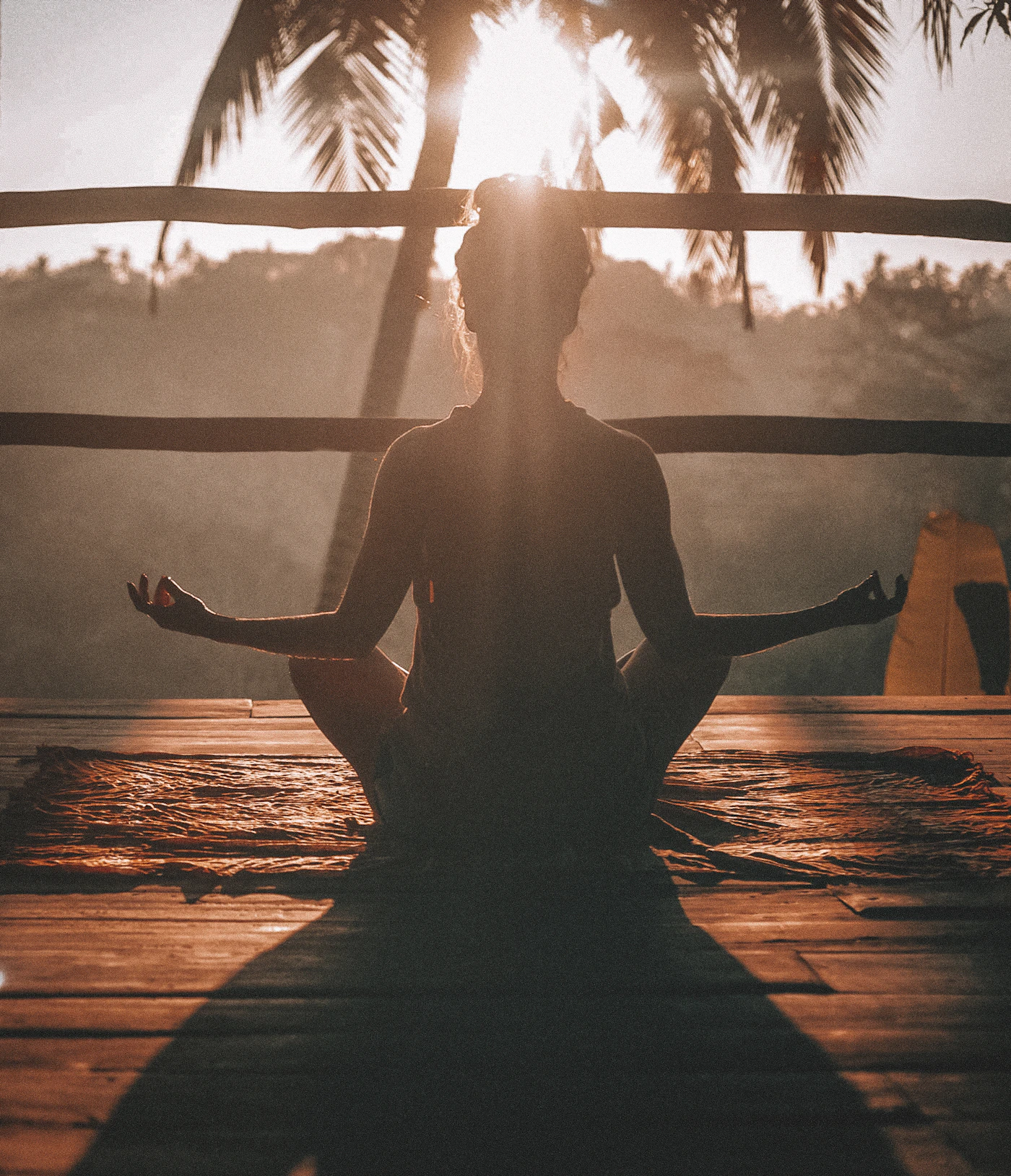
Why you should do it
- Supports flexibility, mobility, and posture with low-cost daily practice.
- Breath-led movement helps reduce anxiety and improve body awareness.
- Can improve sleep quality and emotional regulation with consistency.
- Adaptable for beginners, seniors, and people recovering from stress.
History
Yoga has roots in ancient India and evolved through philosophical, meditative, and physical traditions over centuries. Modern practice blends classical principles with accessible movement methods.
Benefits
Improves flexibility, posture, and breath efficiency while lowering stress load. Regular practice can support sleep quality, emotional steadiness, and overall resilience.
Most popular beginner way
- Start with 10 minutes of gentle Hatha or restorative yoga.
- Focus on breath-movement pairing, not flexibility goals.
- Use 3-5 simple poses: Cat-Cow, Child's Pose, Low Lunge, Seated Fold, Savasana.
- Finish with 2 minutes of still breathing lying down.
🌬️ Tai Chi
Slow movement meditation for balance, calm, and strength.

Why you should do it
- Improves balance and reduces fall risk through gentle weight shifts and postural control.
- Supports stress recovery by combining slow breath with mindful movement.
- Can reduce stiffness and improve joint comfort without intense impact.
- Helps attention and emotional regulation by training relaxed focus.
History
Tai Chi began in China as a martial art and evolved into a healing movement practice used for longevity, balance, and inner calm. Today it is practiced worldwide in homes, parks, clinics, and rehab programs.
Benefits
Builds balance, coordination, and relaxed strength while reducing stress reactivity. Gentle repetitive patterns support mobility and confidence in daily movement.
Most popular beginner way
- Stand with feet hip-width apart and soften your knees.
- Breathe slowly into your belly for 4 counts in and 6 counts out.
- Practice 8-10 minutes of a basic short form (such as Cloud Hands and Commencing Form).
- Move slowly, keep shoulders relaxed, and shift weight smoothly.
- End by standing still for 1 minute and noticing calm in the body.
Beginner tools (click Learn more)
Commencing Form Learn more

Start standing tall, soften knees, and raise/lower both arms with the breath for 6-8 cycles.
Cloud Hands Learn more

Shift weight left-right while hands move like clouds. Slow rhythm trains balance and attention.
Brush Knee Step Learn more

Step forward gently, brush one hand past the knee, and extend the other palm. Repeat both sides.
🙌 Reiki
A gentle hands-based relaxation practice that supports nervous-system calm.

Why you should do it
- Many people report deep relaxation, better sleep, and lower stress after sessions.
- Creates a pause state where breath, heart rate, and muscle tension can settle.
- Pairs well with therapy, meditation, and medical recovery plans as supportive care.
- Very accessible: you can receive it lying down, seated, or through self-practice.
History
Reiki was developed in Japan in the early 1900s by Mikao Usui. It spread globally as a spiritual-relaxation healing art and is now common in wellness settings and some integrative care spaces.
Benefits
Supports deep relaxation, emotional regulation, and restorative rest. It is a low-effort practice that can reduce perceived stress and increase inner steadiness.
Most popular beginner way
- Find a quiet place and sit or lie comfortably.
- Take 5 slow breaths and set a gentle intention: calm, healing, or clarity.
- Place hands lightly on or just above head, heart, and belly for 2-3 minutes each.
- Stay soft and present; notice warmth, tingling, heaviness, or simple quiet.
- Close with gratitude and drink water to re-ground.
Simple Reiki mudras (click Learn more)
Gassho Mudra Learn more
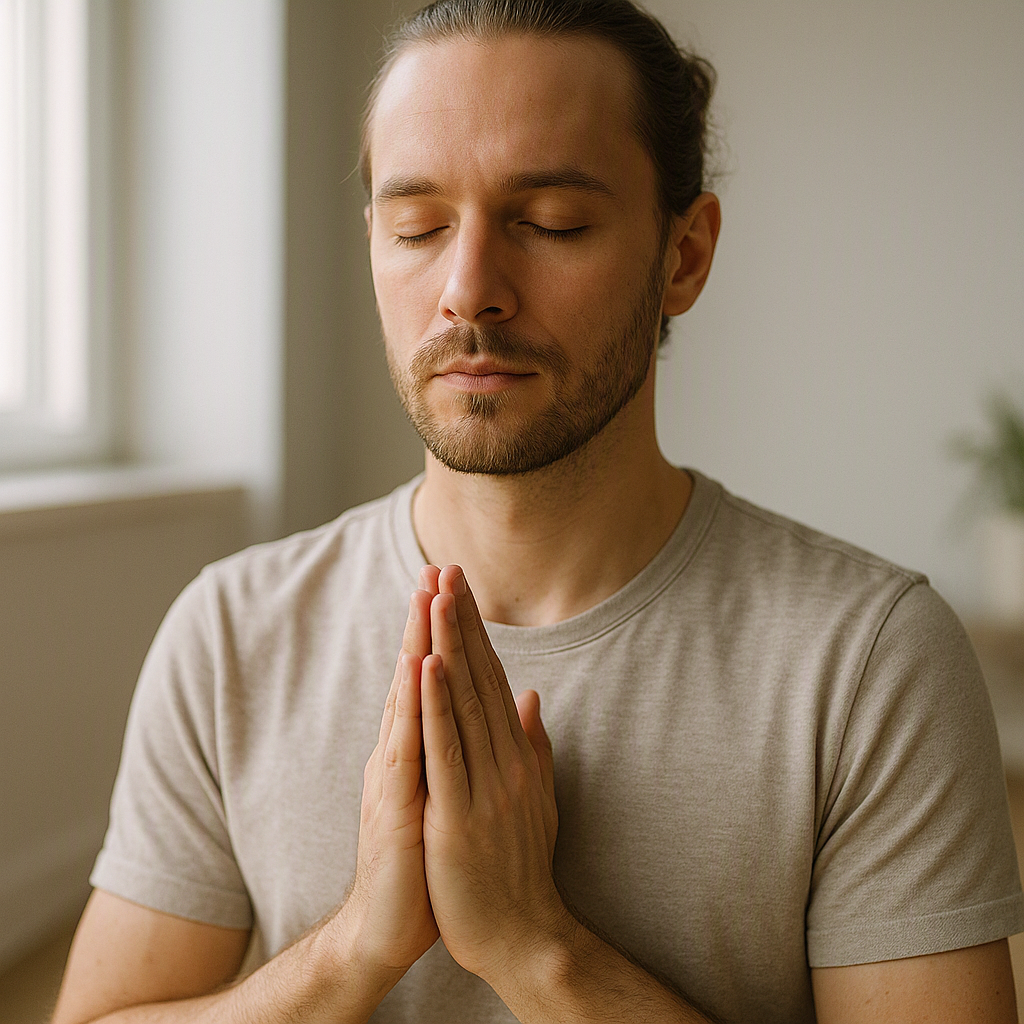
Palms together at heart center. Use this to begin and end practice with focus and gratitude.
Hara Hold Learn more
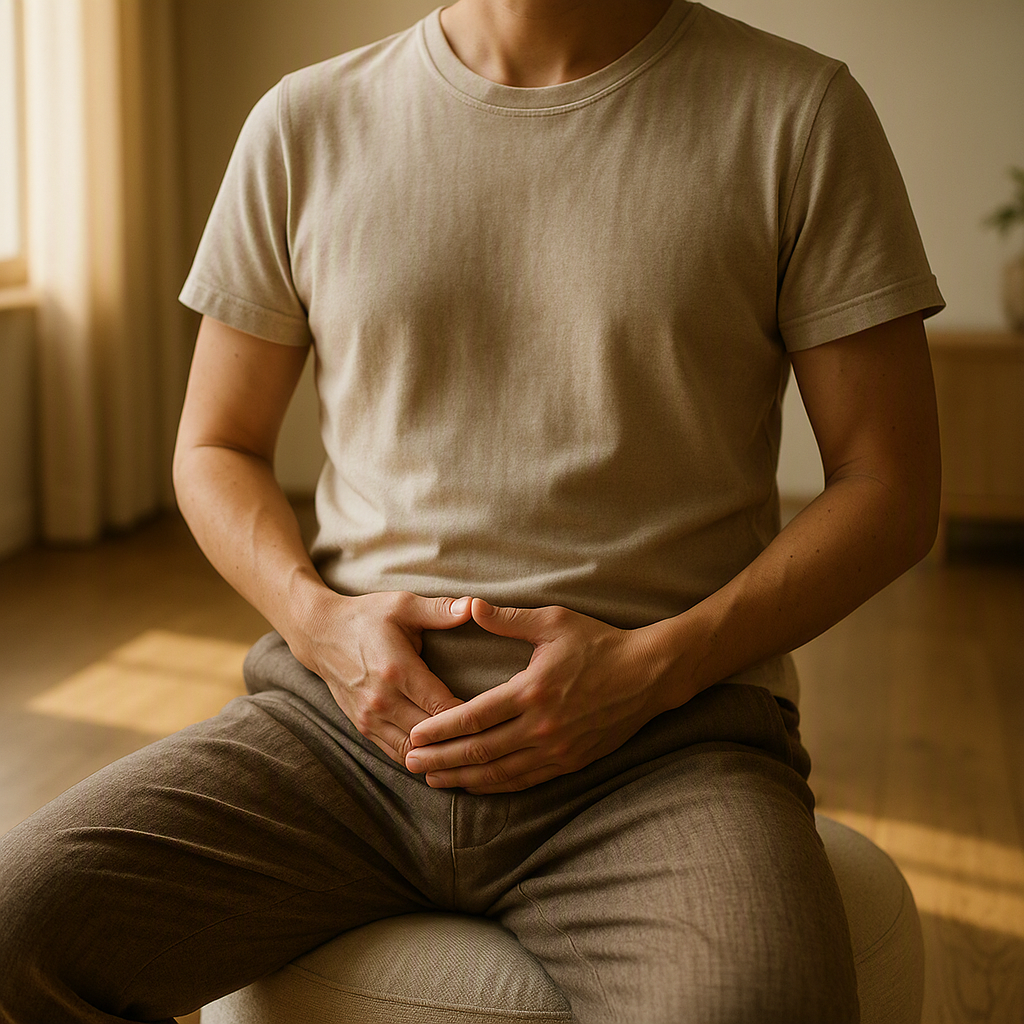
One or both hands over lower belly (hara). This supports grounding and emotional steadiness.
Heart Center Hold Learn more
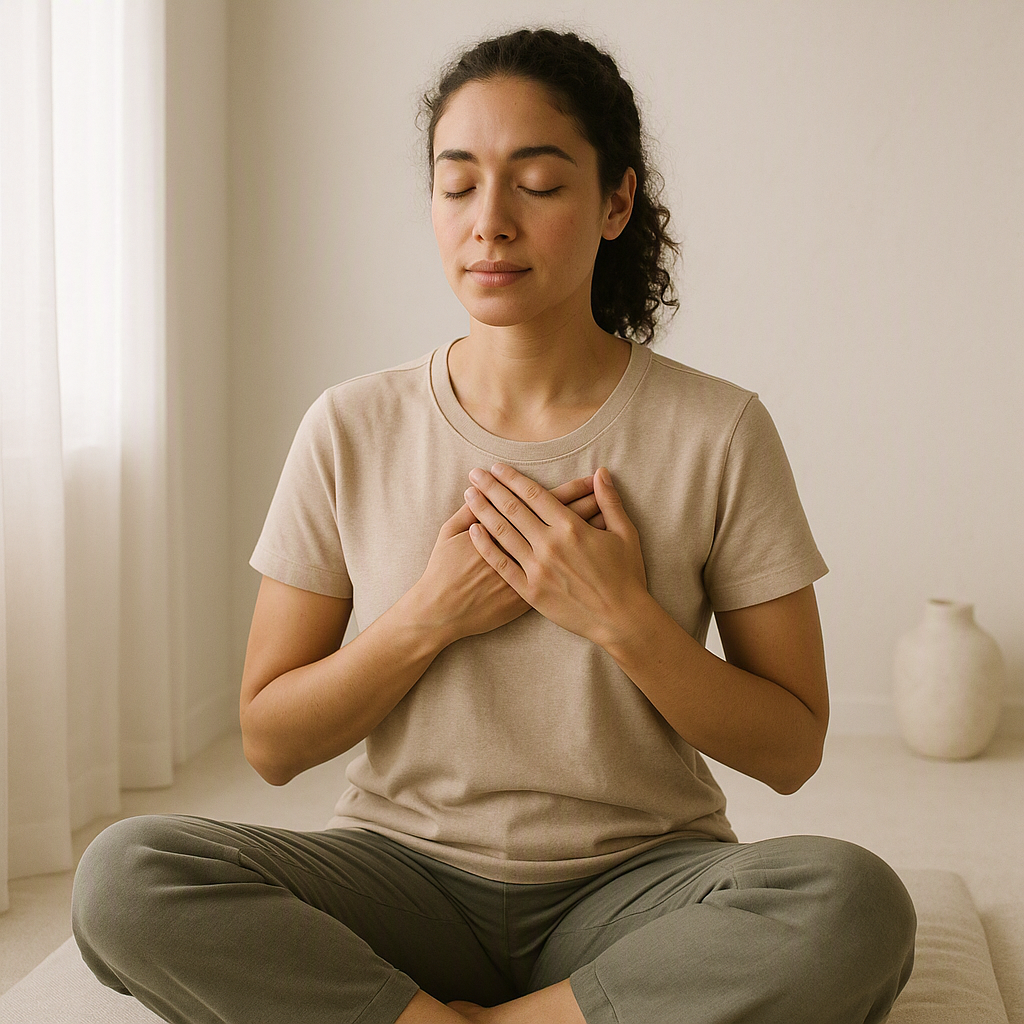
Hands over heart area for calming and self-compassion. Pair with slow breathing for 3-5 minutes.
🧎 Vipassana
Insight meditation that trains non-reactive awareness of breath, body sensations, and mind states.

Why you should do it
- Builds emotional steadiness by observing thoughts and sensations without reacting.
- Reduces mental noise and rumination through consistent awareness training.
- Supports concentration, patience, and stress resilience.
- Can be practiced without equipment in short daily sessions.
History
Vipassana is an ancient Buddhist meditation tradition focused on direct insight into mind-body processes. Modern courses and home practice brought it to global audiences in the 20th century.
Benefits
Strengthens awareness, attention stability, and emotional regulation. Over time, it can reduce rumination and improve clarity in high-stress situations.
Most popular beginner way
- Sit comfortably with upright but relaxed posture.
- Observe natural breathing for 3-5 minutes.
- Scan body sensations from head to feet without judging.
- When thoughts arise, note them gently and return to sensation.
- Start with 10 minutes and gradually increase to 20 minutes daily.
☀️ Surya Namaskar (Sun Salutation)
A complete beginner flow of 12 linked poses. Move with breath, not speed.
Benefits
- Warms the whole body quickly and safely when done mindfully.
- Improves circulation, mobility, and breath-body coordination.
- Builds focus and confidence with a repeatable daily sequence.
- Useful morning practice for energy or afternoon reset for stress.
How to practice
Start with 2-4 rounds slowly. Inhale on expansion/opening, exhale on folding/grounding. Keep knees soft and modify with props if needed.
Each pose with picture and simple instructions
1. Pranamasana (Prayer Pose) Learn more
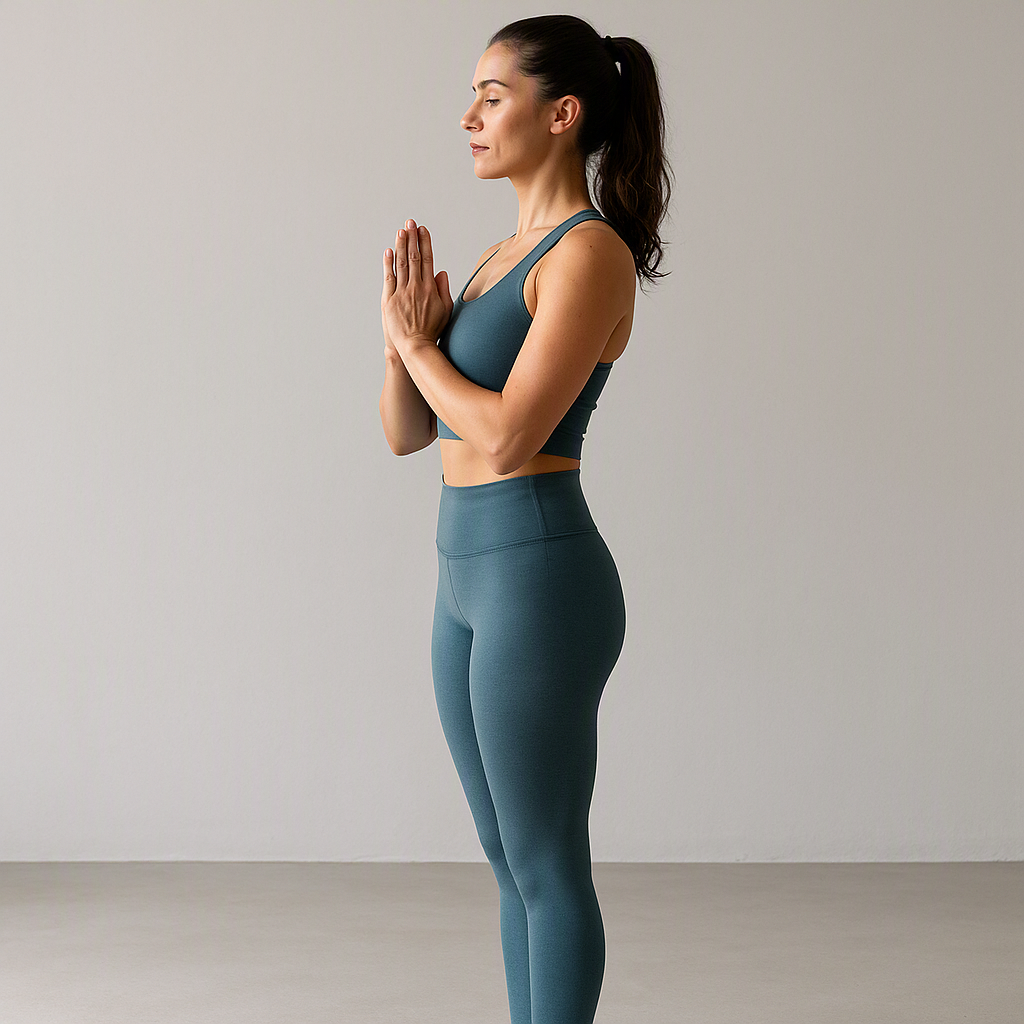
Stand tall at the edge of your mat, feet together or hip-width apart. Bring your palms together at your chest. Relax your shoulders and take one slow breath to center yourself.
2. Hasta Uttanasana (Raised Arms Pose) Learn more
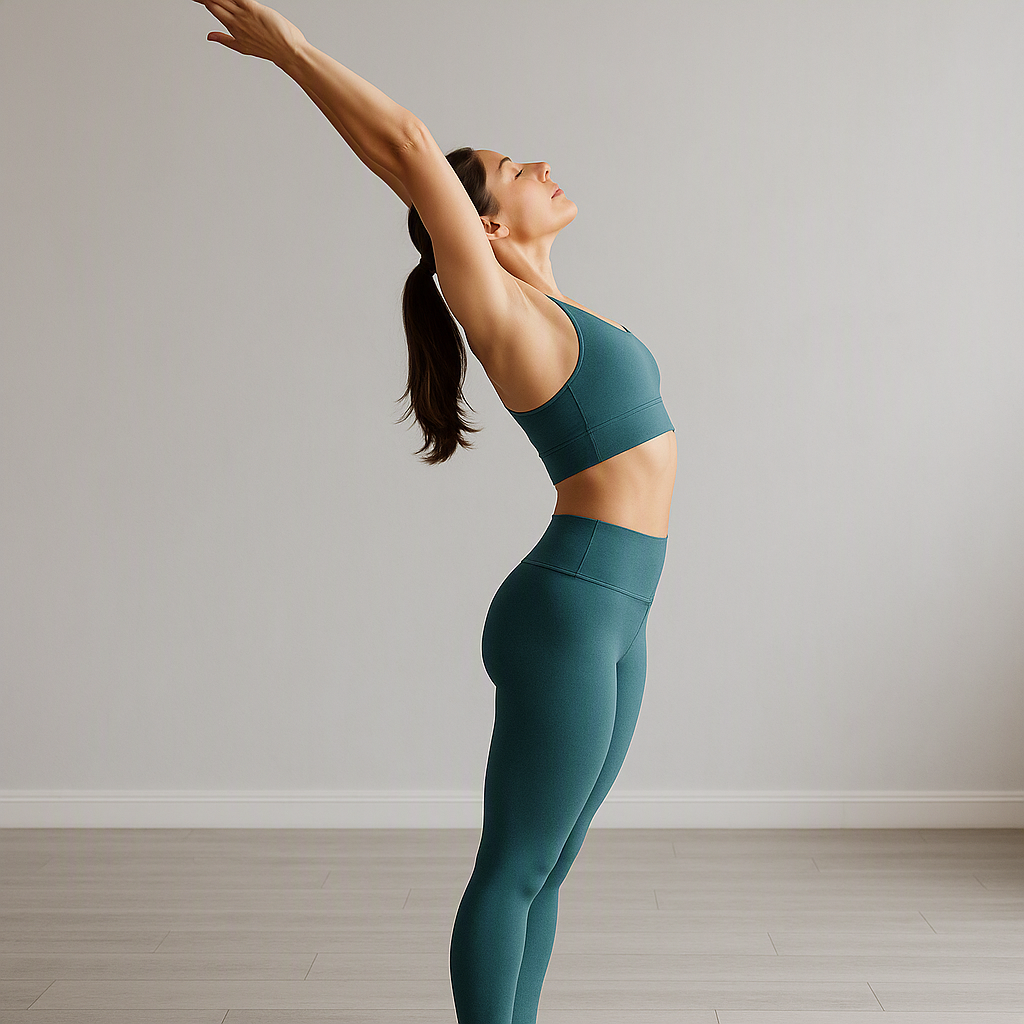
Inhale and stretch both arms up and slightly back, arching gently from the upper back. Keep your core lightly engaged so the lower back doesn't overarch.
3. Hastapadasana (Hand to Foot Pose) Learn more
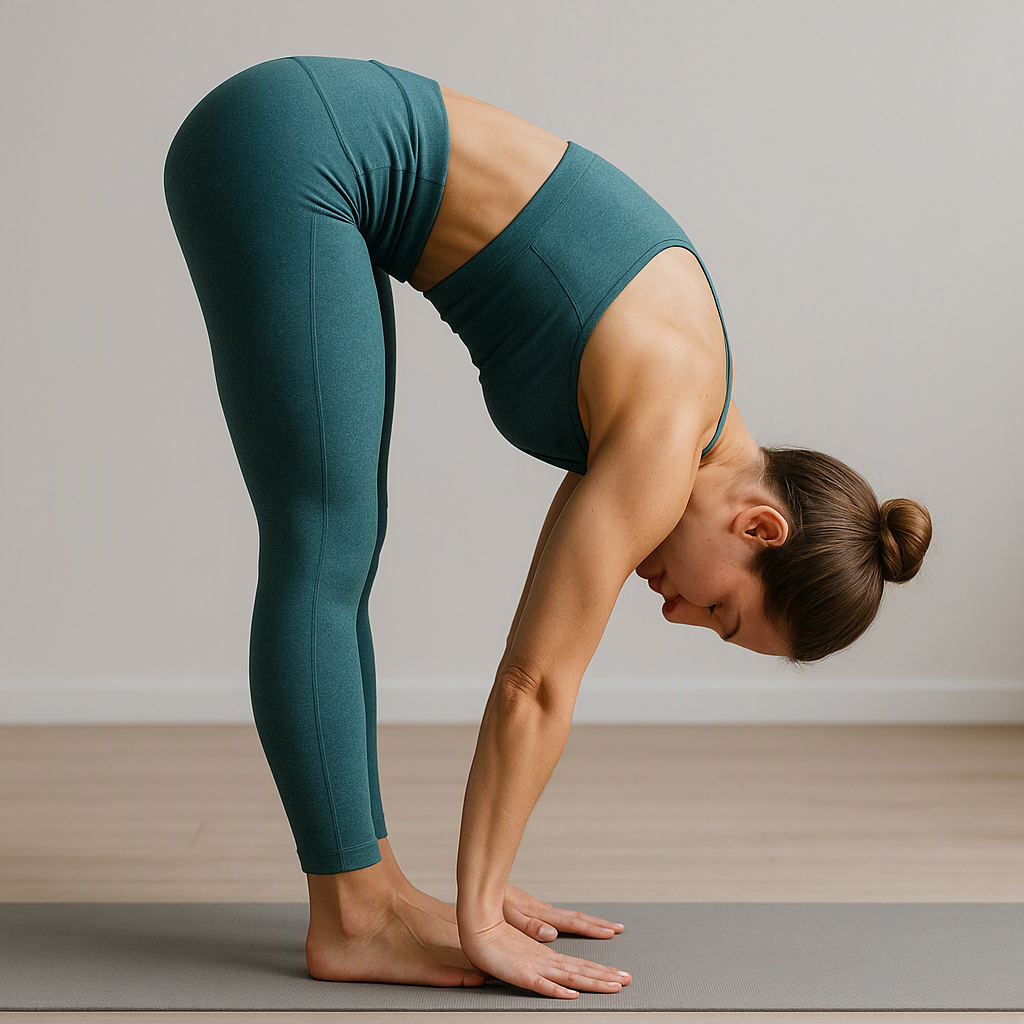
Exhale and fold forward from your hips, bringing your hands toward the floor beside your feet. Bend your knees as much as you need to and let your head hang heavy.
4. Ashwa Sanchalanasana (Equestrian Pose) Learn more
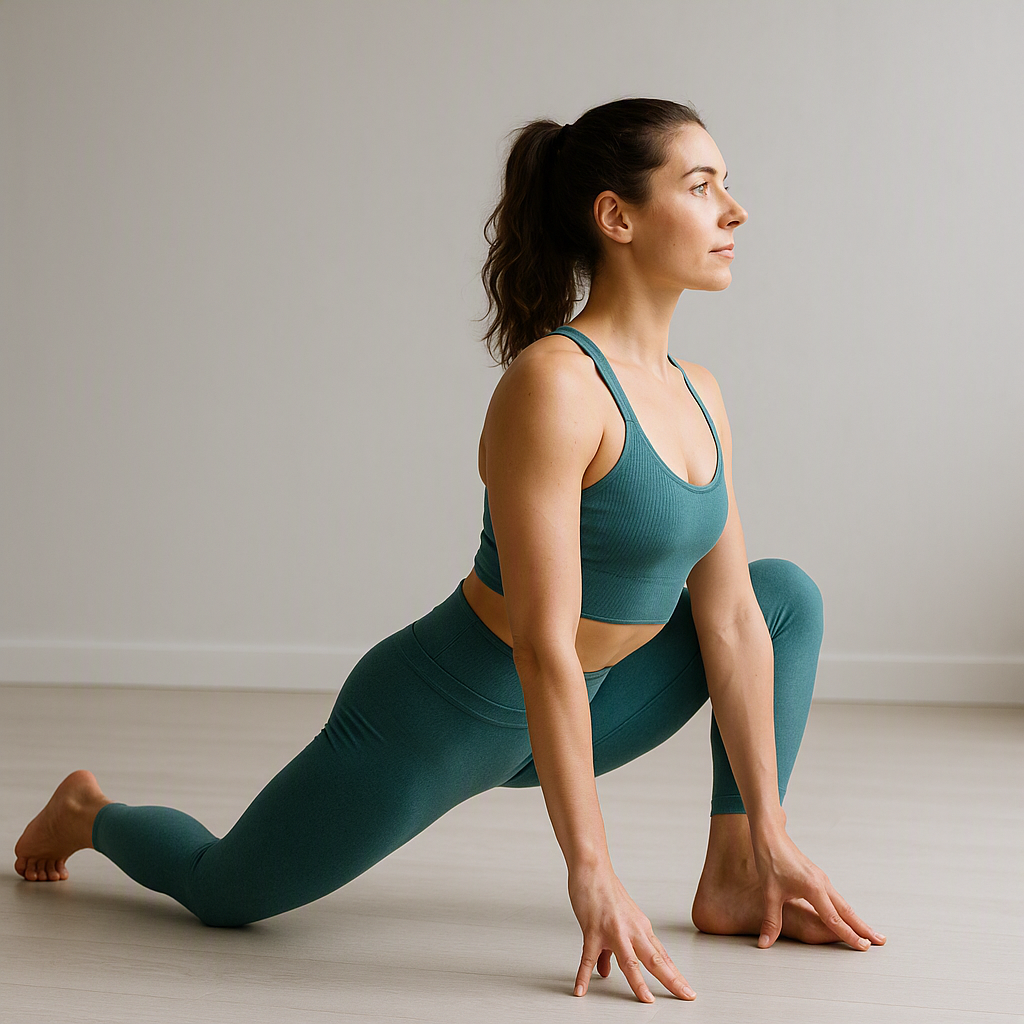
Inhale and step your right leg far back, lowering the knee toward the floor. Keep your left knee stacked over your left ankle, fingertips on the floor, and chest lifted.
5. Dandasana (Plank Pose) Learn more
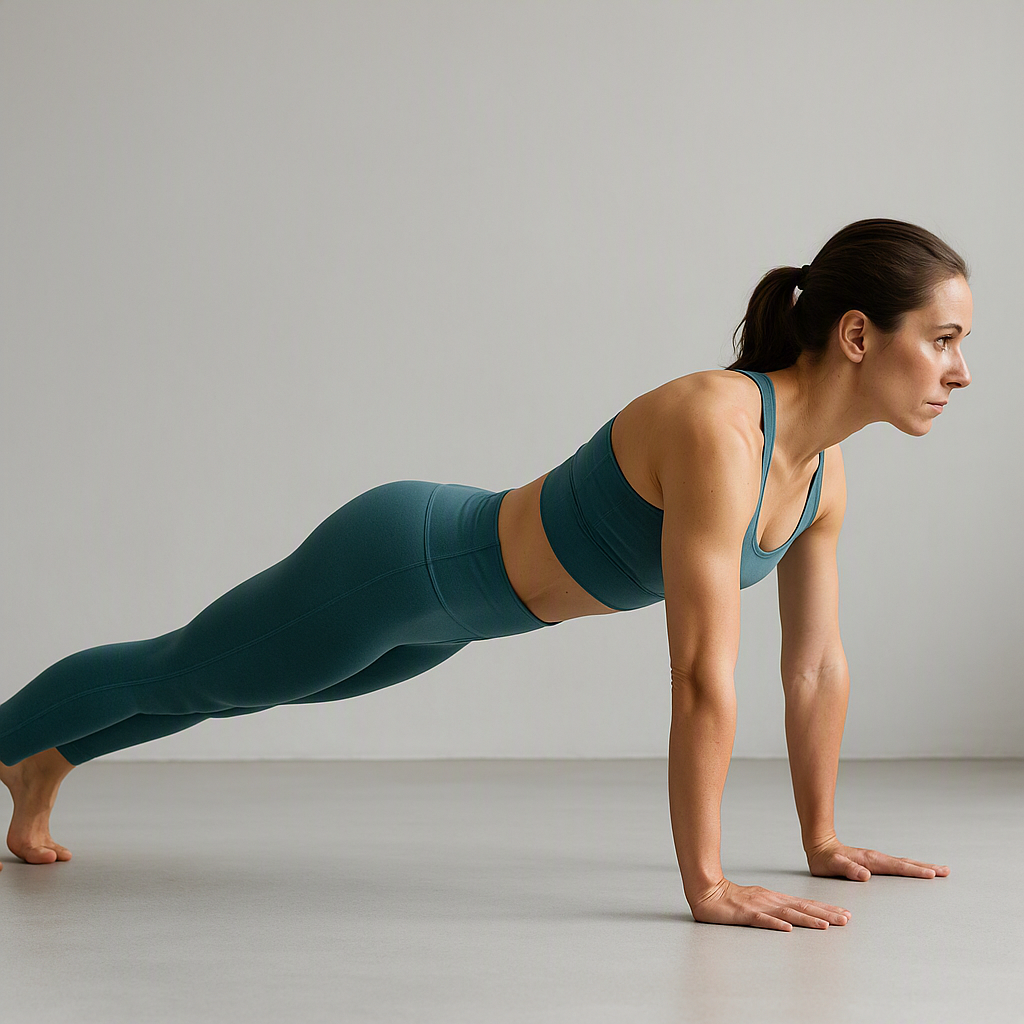
Exhale and step your left leg back to meet the right, coming into a straight-arm plank. Keep your body in one line from head to heels with your core active.
6. Ashtanga Namaskara (Eight-Point Pose) Learn more
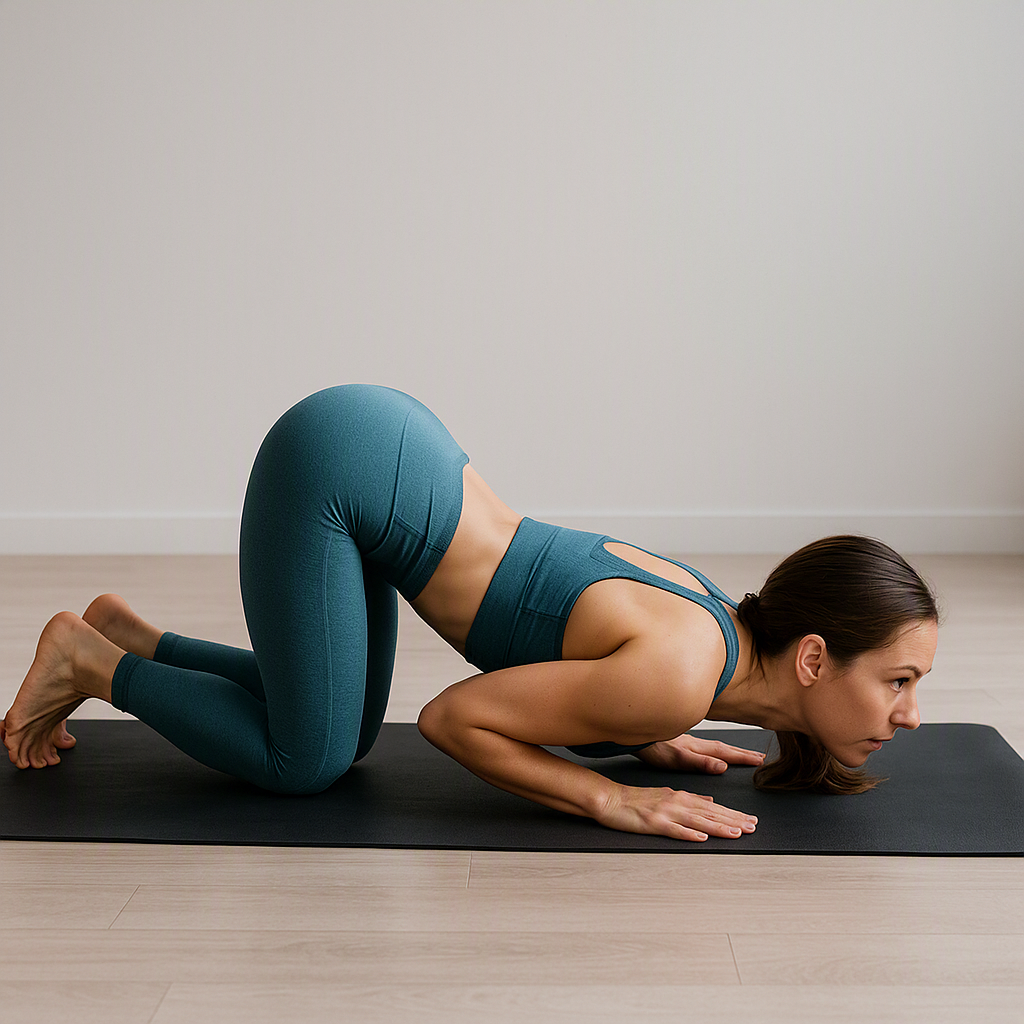
Exhale and gently lower your knees, chest, and chin to the floor while keeping your hips slightly raised. Elbows stay close to your body.
7. Bhujangasana (Cobra Pose) Learn more
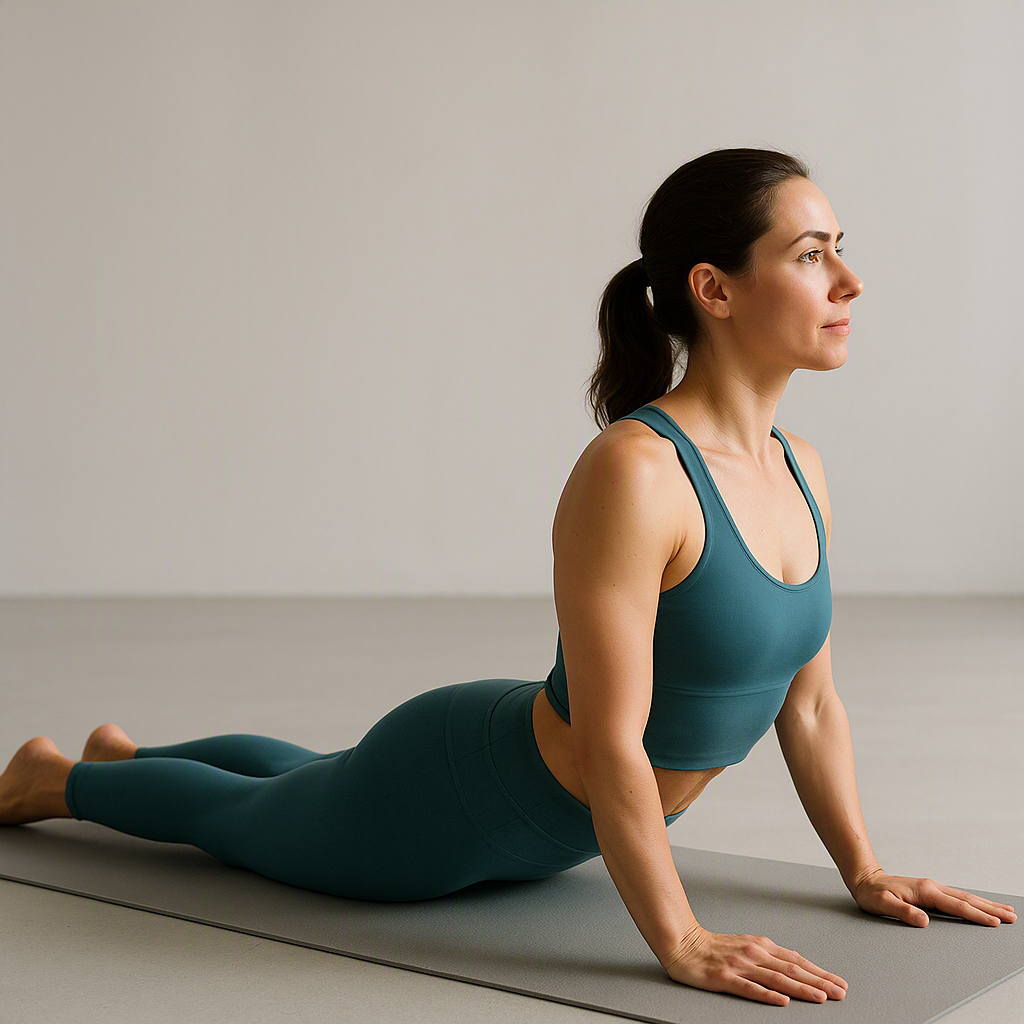
Inhale and slide your chest forward and up into a gentle cobra, keeping elbows soft and hips on the floor. Shoulders stay relaxed, away from your ears.
8. Adho Mukha Svanasana (Downward-Facing Dog) Learn more
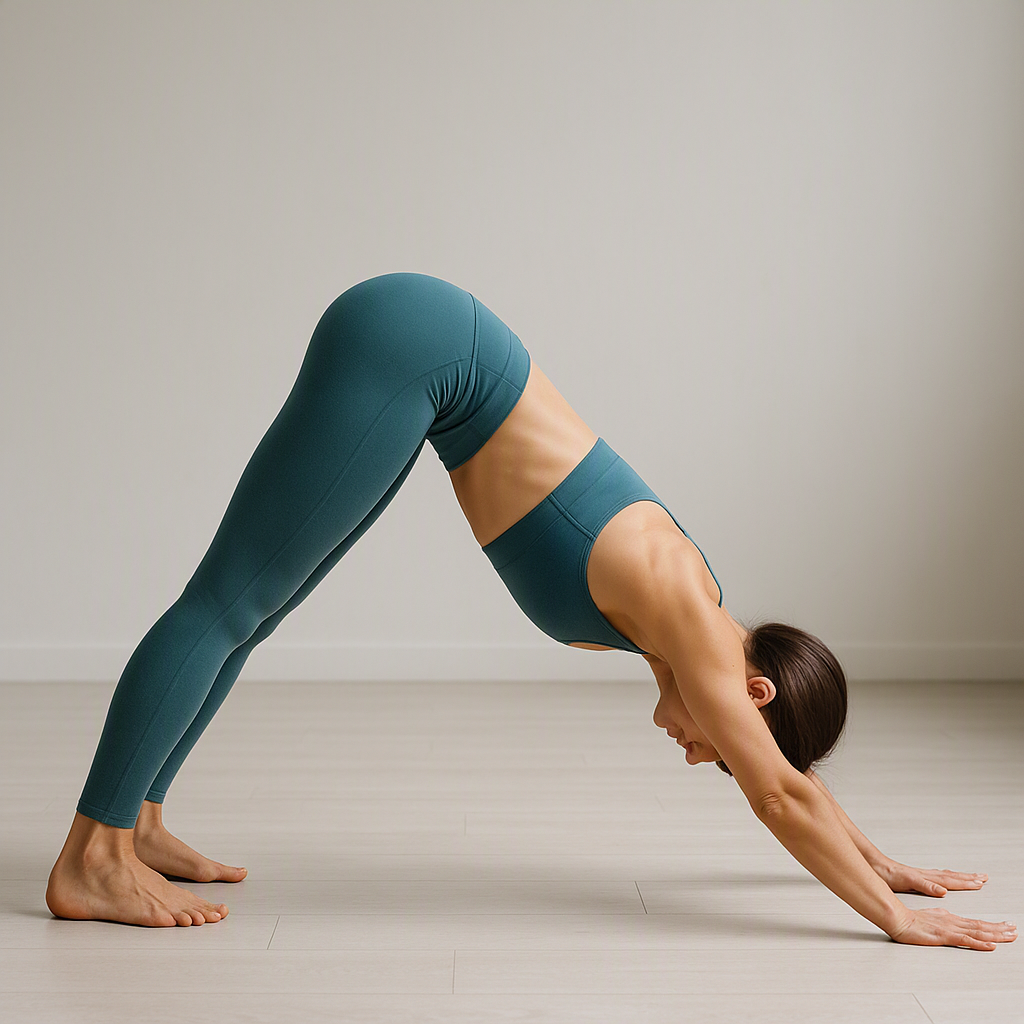
Exhale and lift your hips up and back into an inverted V. Press firmly through your hands and heels, bending your knees if your hamstrings feel tight.
9. Ashwa Sanchalanasana (Equestrian Pose, Return) Learn more
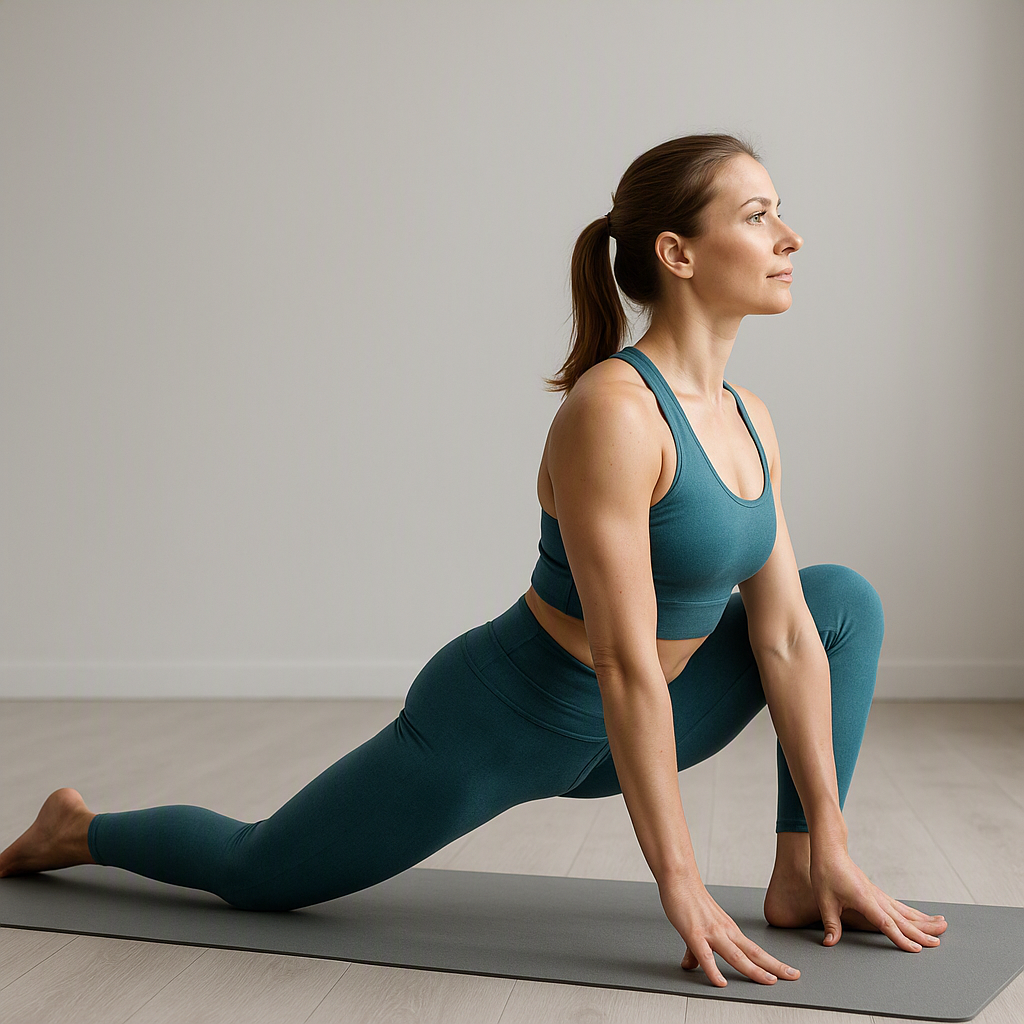
Inhale and step your right foot forward between your hands, lowering the left knee toward the floor. Keep your front knee stacked over the ankle and chest lifted.
10. Hastapadasana (Hand to Foot Pose, Return) Learn more
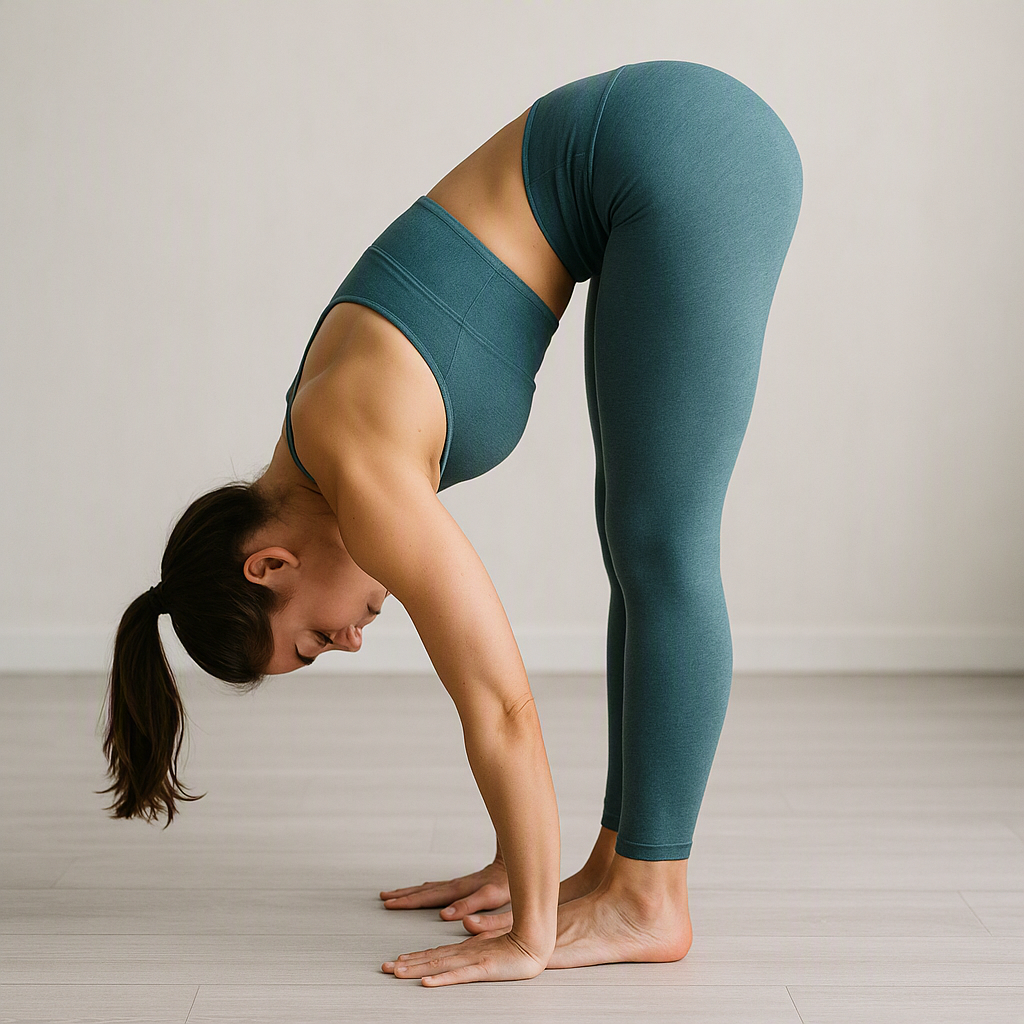
Exhale and step your left foot forward to meet the right, folding forward with a relaxed neck and soft knees.
11. Hasta Uttanasana (Raised Arms Pose, Return) Learn more
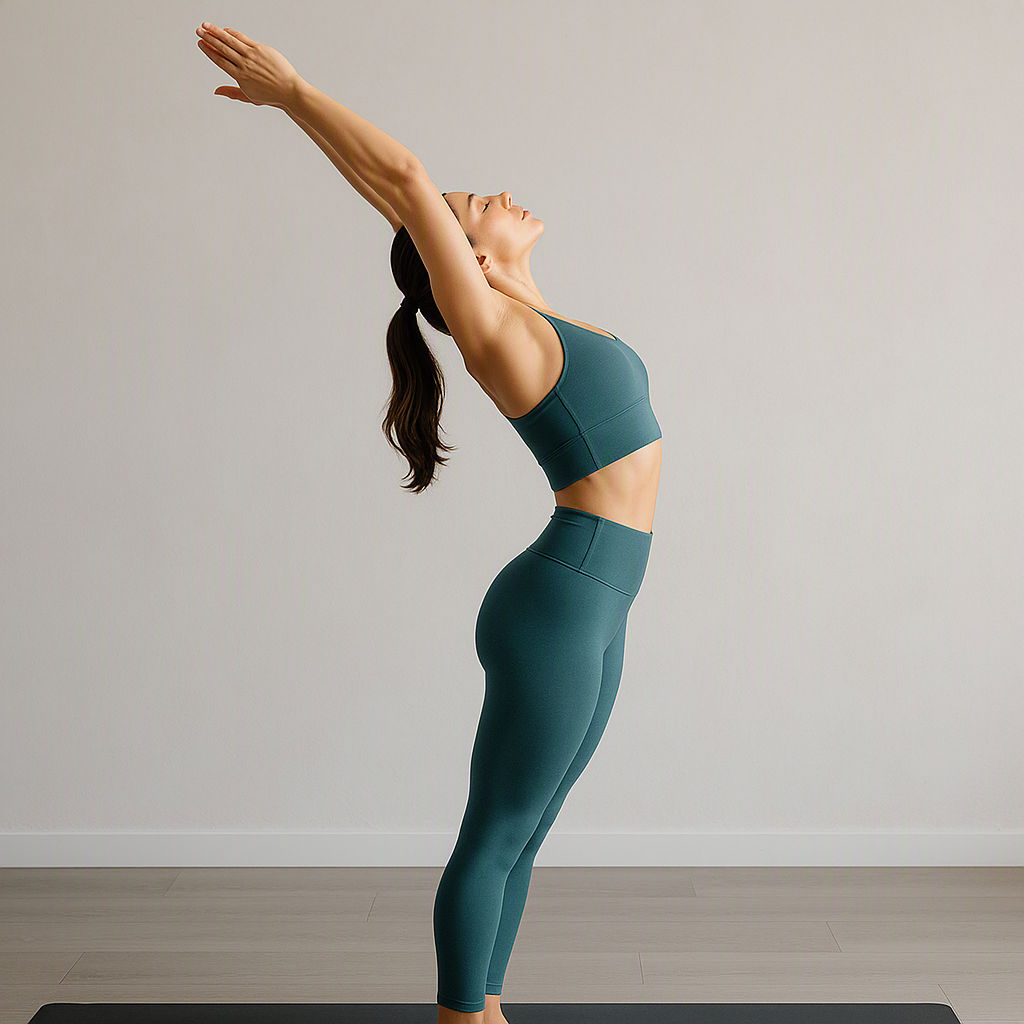
Inhale and rise up with a long spine, sweeping both arms overhead into a gentle backbend.
12. Tadasana (Mountain Pose) Learn more
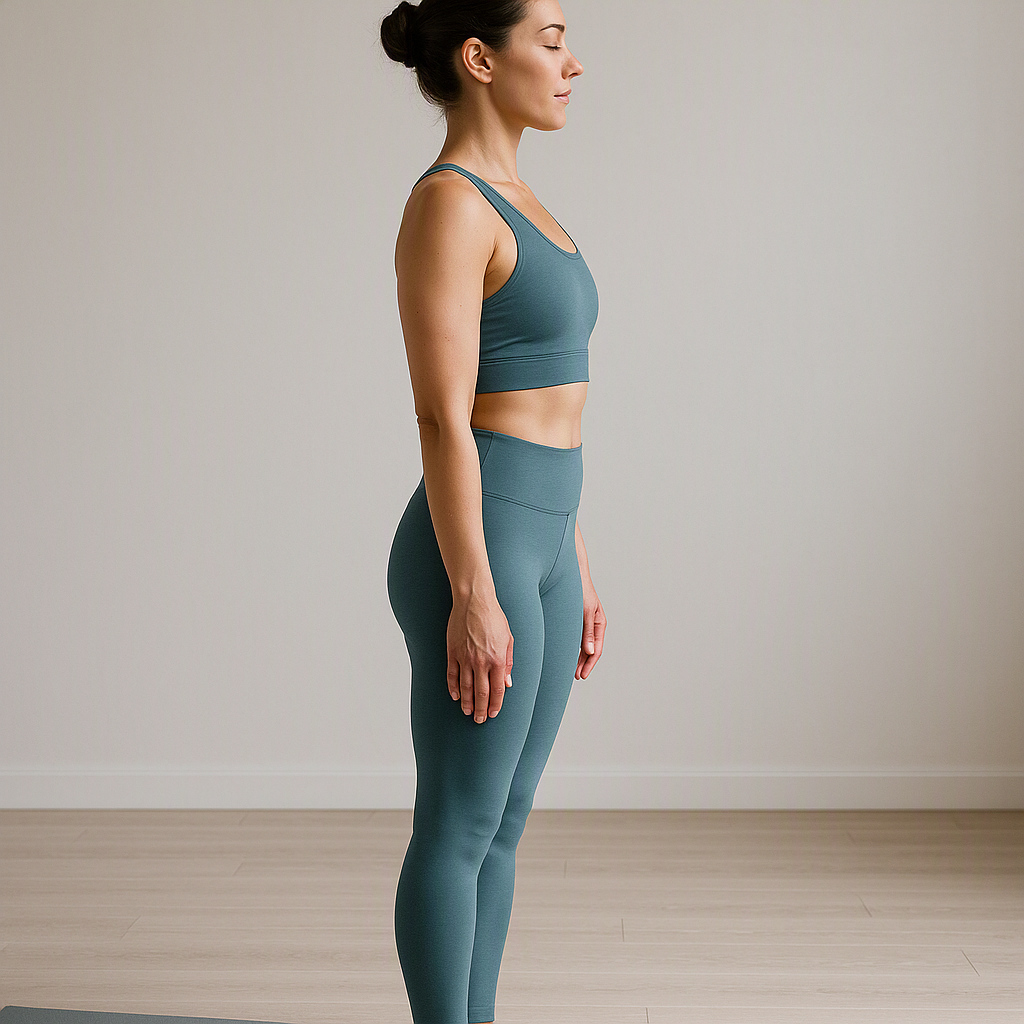
Exhale and bring your arms down by your sides, standing tall and relaxed. Pause here and notice your breath and heartbeat before repeating the round on the other side (left leg back on step 4 and 9).